
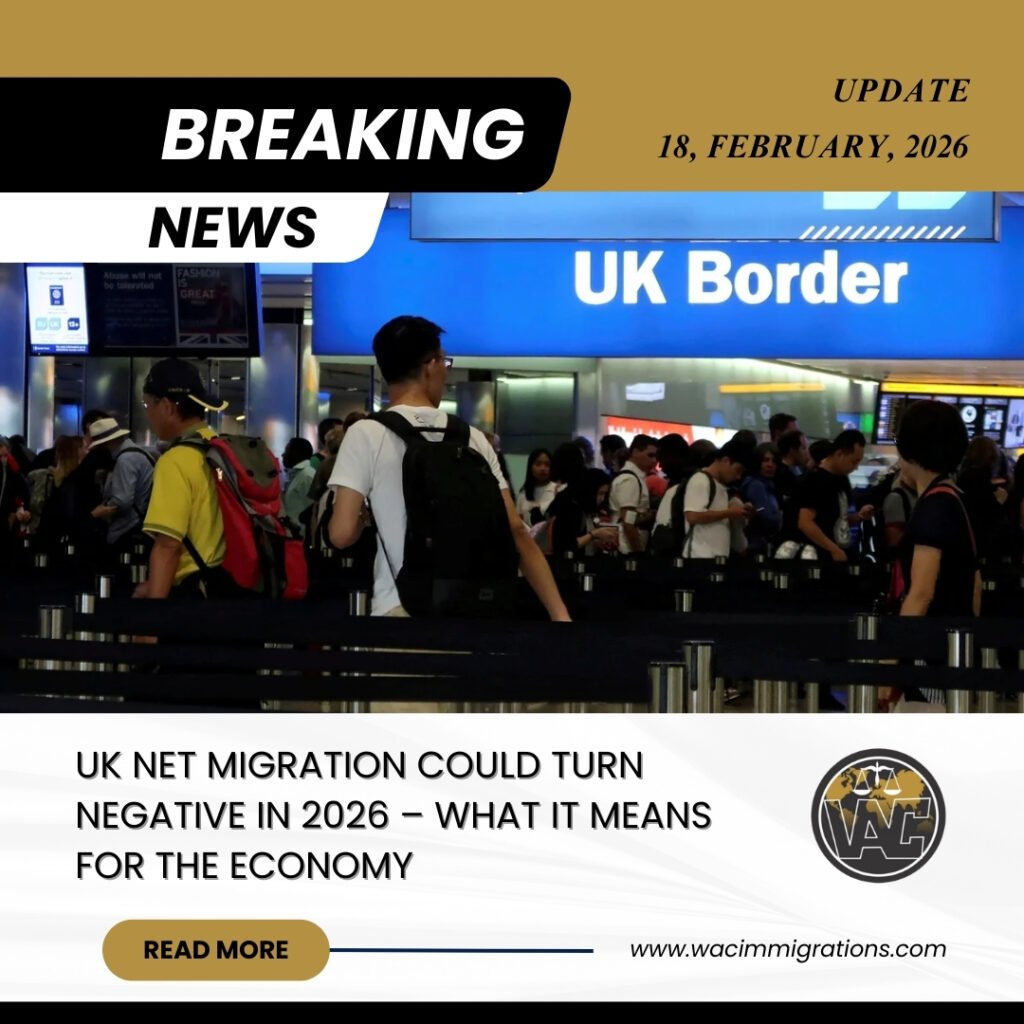
A new analysis reported by The Guardian suggests the UK could experience negative net migration for the first time since 1993 meaning more people may leave the country than arrive.
This dramatic shift follows stricter immigration rules introduced under both Conservative and Labour governments.
📉 What Is Happening?
Net migration peaked at nearly 1 million in 2023
It fell to 431,000 in 2024
It may drop to 184,000 in 2025
It could reach –60,000 in 2026
Stricter policies include:
Higher salary thresholds for skilled worker visas
Care workers banned from bringing dependents
Postgraduate students restricted from bringing families
Increased scrutiny of visa sponsors
Tighter rules for converting student visas into work visas
🎓 Universities Under Pressure
UK universities are already feeling the impact.
The reported merger between University of Greenwich and University of Kent highlights financial stress caused by falling international student numbers.
Foreign students pay higher tuition fees (often £20,000–£30,000+), which are critical for university funding. A decline in international enrolment directly affects institutional budgets.
🏥 Healthcare, Construction & Hospitality Also Affected
Sectors heavily reliant on overseas workers are facing recruitment gaps:
NHS health trusts
Care homes
Construction firms
Hospitality businesses
According to the British Chambers of Commerce, many firms say the visa system has become:
Too expensive
Too restrictive
Difficult to navigate
💰 Economic Impact “Similar to Brexit”?
The National Institute of Economic and Social Research warns that if net migration falls to zero long term, it could reduce UK national income by 3.7% by 2040 similar to the economic hit from Brexit.
The Office for Budget Responsibility previously estimated Brexit reduced economic output by around 4%.
Economists argue:
Migrants generally earn above-average wages
They contribute positively to tax revenue
Reduced migration could create a £6–8 billion shortfall in public finances
🏛 Political Implications
For Prime Minister Keir Starmer, falling migration may ease political pressure from anti-immigration parties.
However, for Chancellor Rachel Reeves, the fiscal consequences could complicate economic planning due to:
Lower tax revenue
Slower workforce growth
Increased labour shortages
🌍 Germany Taking the Opposite Approach
While the UK tightens migration, Germany is expanding skilled migration routes to address its ageing population.
According to the Organisation for Economic Co-operation and Development, countries embracing migration often experience:
Stronger wage growth
Higher productivity
Long-term fiscal benefits
📊 What This Means for Students & Skilled Migrants
For international students and professionals:
✔ UK is becoming more selective
✔ Salary thresholds are significantly higher
✔ Transition from study to work is more difficult
✔ Compliance and strong documentation are critical
However, experts suggest the drop in migration may be temporary, with numbers potentially rising again later in the decade.
🔎 WAC Immigration Analysis
At WAC Immigration, we believe:
The UK is shifting toward a more controlled, employer-driven migration model
High-skilled, high-salary applicants will still find opportunities
International students must plan carefully for post-study work routes
Alternative destinations (Germany, Canada, Australia) may become more attractive
Strategic planning is now more important than ever.
📞 Contact WAC Immigration
📞Visit Visa Inquiries: 0310 7201666
📞Immigration Support: 0326 7779666
🌐Website:www.wacimmigrations.com