
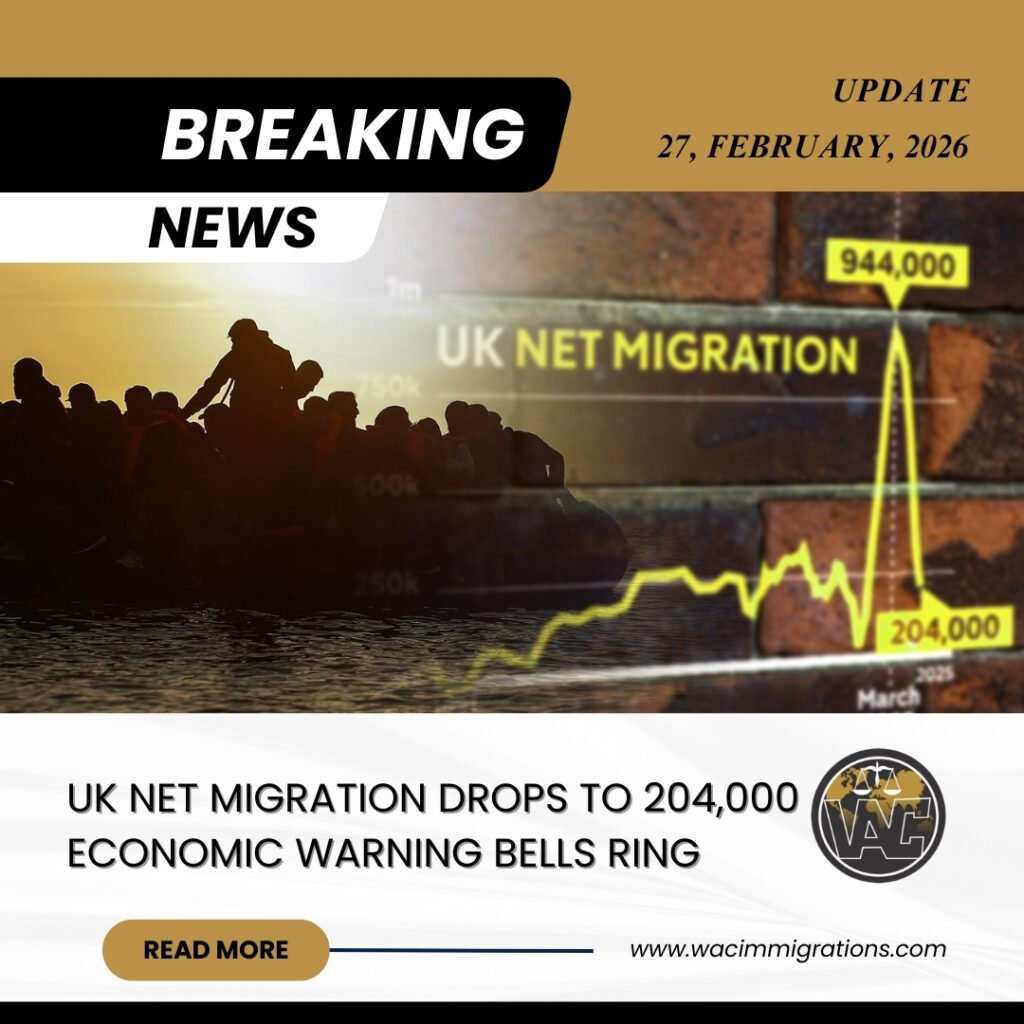
The United Kingdom has recorded a sharp fall in net migration, with figures showing it dropped to around 204,000 significantly lower than previous years and below earlier government forecasts. The development has triggered debate among economists and policymakers about its impact on the country’s economic future.
📉 What the Latest Figures Show
According to recent reports highlighted by the Financial Times, net migration has fallen much faster than expected.
Net migration refers to the difference between the number of people moving to the UK and those leaving. A figure of 204,000 means that 204,000 more people entered the UK than left during the reporting period but this is a major decline compared to earlier highs.
This drop follows a series of tighter immigration measures introduced by the UK government.
🏛 Why Has Net Migration Fallen?
The fall is largely attributed to stricter immigration rules, including:
- Higher salary thresholds for Skilled Worker visas
- Restrictions on dependants for care and student visa holders
- Tighter compliance checks on sponsors
- Reduced issuance of health and care worker visas
These changes were part of the government’s effort to reduce overall migration numbers.
💼 Economic Impact – Why Experts Are Concerned
Economists warn that the sharp drop could have serious consequences:
1-Labour Shortages
Many UK sectors including healthcare, hospitality, construction, and logistics rely heavily on overseas workers. Fewer migrants may mean:
- Staffing shortages
- Increased recruitment costs
- Slower service delivery
2-Fiscal Pressure
Migrants contribute through taxes and national insurance. Lower migration may result in:
- Reduced tax revenue
- Increased borrowing
- Greater pressure on public finances
3-Slower Economic Growth
Population growth often supports economic expansion. A lower-than-expected migration figure could:
- Reduce GDP growth projections
- Impact long-term workforce sustainability
📊 Bigger Picture
The decline comes at a time when the UK economy is already facing:
- Cost-of-living pressures
- Public service strain
- Ongoing post-Brexit adjustments
While some political groups view lower migration as a success, economic analysts argue that the long-term fiscal consequences must be carefully managed.
🔎 What Happens Next?
If migration remains at lower levels:
- The government may need to adjust fiscal planning
- Employers may push for sector-specific visa relaxations
- Skilled worker routes could be revised again
- Healthcare and care sectors may lobby for exemptions
The coming months will be critical in determining whether this drop is temporary or part of a long-term structural shift.
📞 Need Guidance on UK Immigration?
Whether you’re planning to study, work, or settle in the UK, policy changes can directly impact your visa options.
👉 Contact us today for expert guidance and the latest UK immigration updates.
📞Visit Visa Inquiries: 0310 7201666
📞Immigration Support: 0326 7779666
🌐Website:www.wacimmigrations.com