
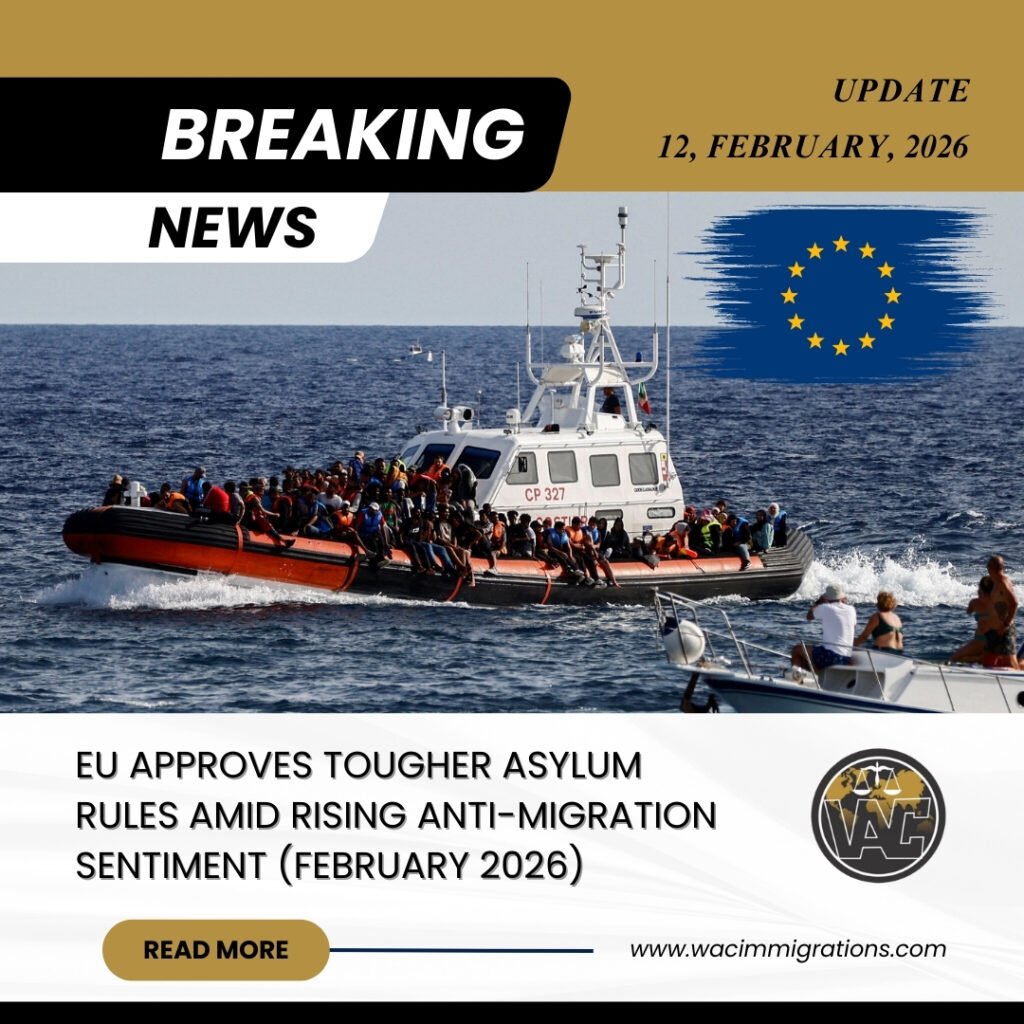
The European Parliament has approved major changes to the EU asylum system, marking one of the strongest shifts in migration policy since the 2015 refugee crisis. The reforms now await final approval from the 27 EU member states before full implementation.
📜 What Has Been Approved?
EU lawmakers passed amendments to the Asylum Procedures Regulation, introducing:
- ✅Fast-track rejection of asylum applications
- ✅ Creation of a formal “safe country” list
- ✅ Easier return of rejected asylum seekers
- ✅ Legal pathway for potential return hubs outside the EU
These changes are part of the broader EU Migration Pact (approved in 2023), set to be fully implemented by June 2026.
🌍 “Safe Country” Policy Explained
Under the new rules:
- Asylum claims can be rejected if applicants could have sought protection in a country deemed “safe.”
- Migrants may be deported to countries where they have little or no connection.
- Countries like Egypt and Tunisia are included in the proposed safe-country list, despite ongoing human rights concerns.
Critics argue this could weaken protections guaranteed under the 1951 Refugee Convention, which prohibits returning individuals to places where they may face danger.
🏗 Return Hubs Outside the EU
The reforms move the EU closer to establishing “return hubs” in third countriessimilar to Italy’s controversial processing centers in Albania.
These hubs would:
- Process asylum seekers outside EU territory
- Potentially reduce migration pressure within EU borders
- Shift responsibility beyond EU member states
Specific operational rules for these hubs are still under discussion.
⚖ Human Rights Concerns
Humanitarian organizations strongly oppose the reforms, warning that:
- Asylum applications could be rejected without full review.
- Individuals may be sent to countries they have never entered.
- Human rights risks could increase in designated “safe” countries.
Amnesty International and several EU lawmakers have criticized the move as a weakening of refugee protection commitments.
📈 Why Is the EU Taking This Step?
The decision reflects:
- Rising anti-immigration sentiment across Europe.
- Increased political support for far-right and nationalist parties.
- Ongoing pressure on governments to reduce irregular migration.
- A shift toward stricter border control and faster deportations.
Since the 2015–2016 refugee influx, migration policy has remained one of the most politically sensitive issues in Europe.
🔎 Bigger Picture
The EU is clearly moving toward:
- Controlled and faster asylum processing
- Expanded deportation mechanisms
- Externalization of migration management
- Stricter interpretation of refugee protections
This signals a broader global trend in 2026 countries focusing on border security and return policies rather than expanding asylum access.
📞 Contact Us
📞Visit Visa Inquiries: 0310 7201666
📞Immigration Support: 0326 7779666
🌐Website:www.wacimmigrations.com